Back to Resources

Tacton’s Connect to Anything, Powered By Workato: Breaking Down Data Silos in Manufacturing

Discover Tacton’s Connect to Anything, powered by Workato, to break data silos, connect ERP, CRM, and PLM systems, and drive manufacturing innovation.

Tacton’s Connect to Anything, Powered By Workato: Breaking Down Data Silos in Manufacturing

In manufacturing, efficiency and collaboration are essential for success. Yet, many manufacturers face challenges when managing disparate systems—CPQ platforms, ERPs, CRMs, PLM, analytics and eCommerce tools that don’t communicate seamlessly. At Tacton, we understand that integration is more than just a technical need—it’s the key to unlocking the full potential of your digital ecosystem. 

By enabling seamless connections, manufacturers can transform operations, empower teams, and deliver exceptional customer experiences. Let’s explore how the right integrations inspire agility, productivity, and innovation in manufacturing. 

The Power of Connected Systems in Manufacturing 

Imagine a manufacturing process where engineering, sales, and operations work in sync. Sales reps configure custom solutions with real-time data from the ERP, engineering teams collaborate effortlessly on updated designs, and operations ensure timely delivery based on accurate supply chain insights. This isn’t just a vision; its what seamless integration enables. 

Disconnected systems often lead to: 

  • Missed Opportunities: Siloed data limits visibility, making it harder to identify customer needs or market trends 
  • Manual Bottlenecks: Without automation, repetitive tasks like data entry slow down workflows and increase errors 
  • Inefficient Collaboration: Teams waste time reconciling disparate data, hindering their ability to work efficiently 

Connected systems eliminate these barriers, fostering streamlined operations and more strategic decision-making. 


Integration in Action: Real-World Scenarios 

Seamless integration has the power to revolutionize every aspect of manufacturing, from sales to supply chain management. Here’s how manufacturers are leveraging integration to drive efficiency, accuracy, and innovation: 

Optimizing Sales and Quoting 

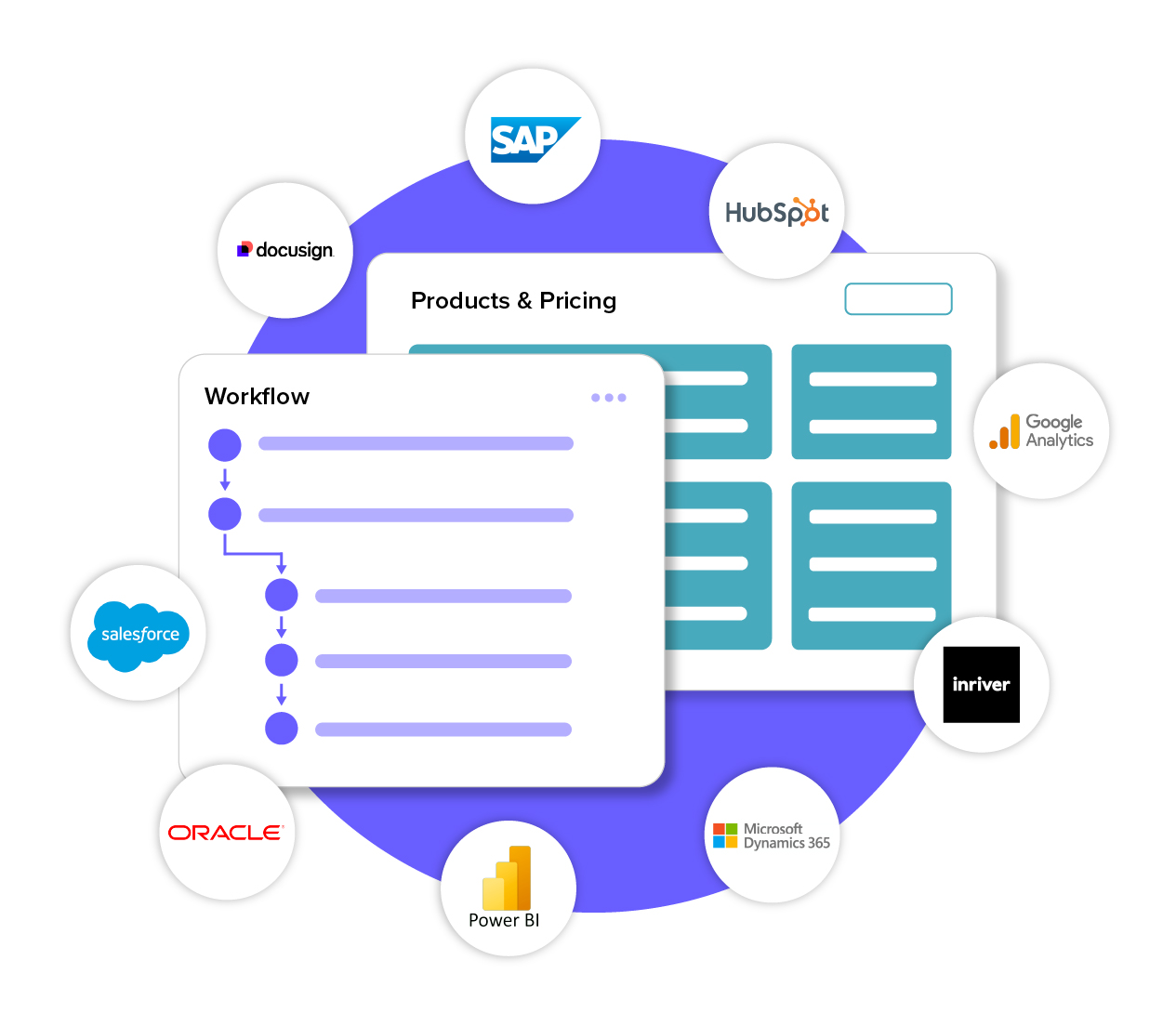
Integrating CPQ systems with ERPs like SAP or Microsoft Dynamics empowers sales teams to provide precise, real-time quotes. Access to accurate inventory levels, lead times, and production costs not only reduces quoting errors but also accelerates order processing, creating a smoother and more reliable customer experience. 

Strengthening Customer Relationships 

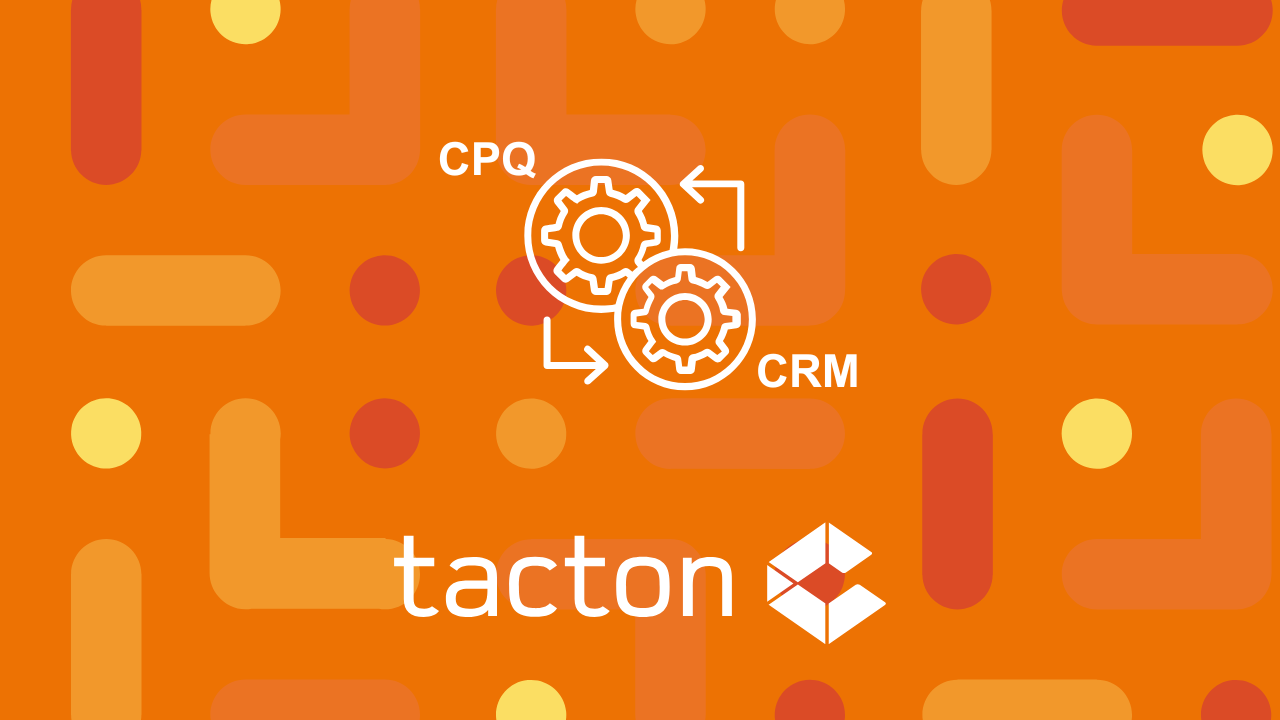
Integrating CPQ with CRM platforms like Salesforce or Oracle empowers manufacturers to deliver personalized customer experiences. Sales teams can access real-time customer insights, such as past purchases, preferences, and open opportunities, directly within the CPQ interface. This integration not only streamlines the sales process but also strengthens customer relationships by providing tailored recommendations and fostering trust. 

Enabling Connected Engineering 

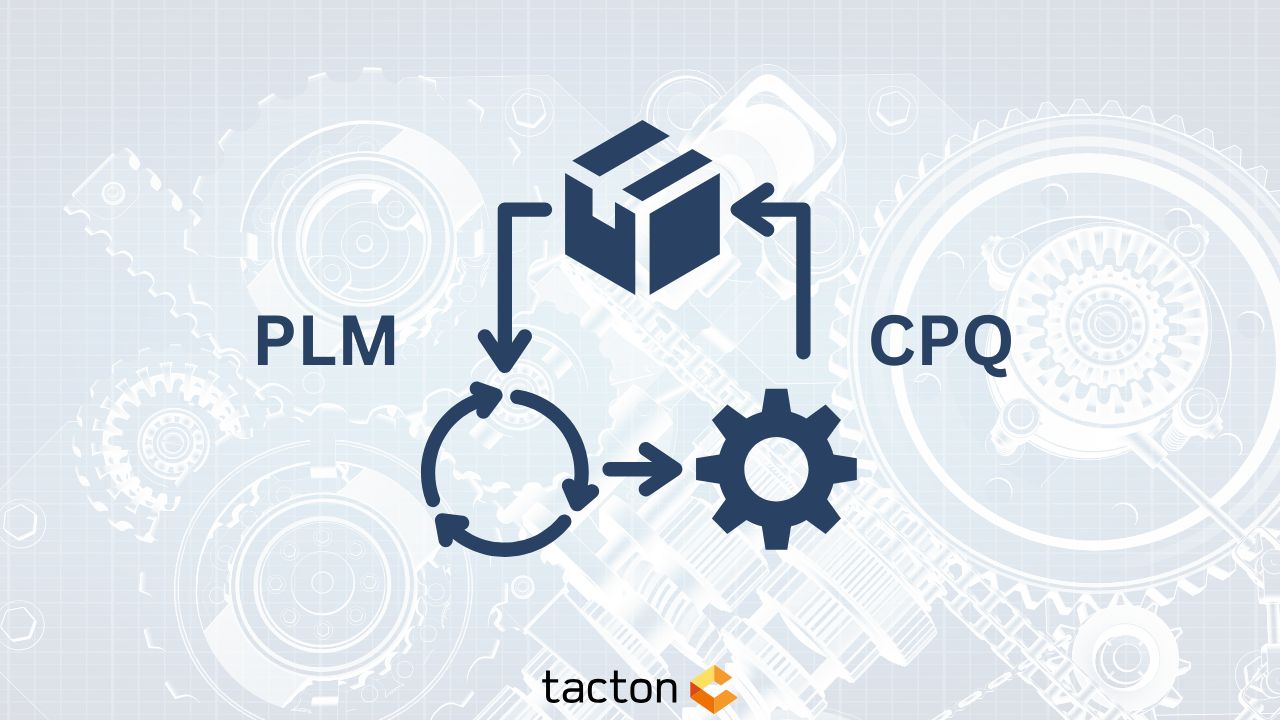
By linking PLM and PIM systems with CPQ, manufacturers ensure that every configuration is based on the latest product designs and specifications. This reduces costly rework and enhances accuracy, enabling engineering and sales teams to collaborate more effectively. 

Enhancing Supply Chain Efficiency 

Automated data flows between ERP and supply chain management tools allow manufacturers to quickly adjust to disruptions, such as delays or shortages. With seamless integration, production schedules remain intact, and customer expectations are consistently met. 

Simplifying Contracts with CLM Integration 

Integrating CPQ with Contract Lifecycle Management (CLM) tools like Docusign or Icertis streamlines the contract process. Quotes and contracts can be sent for e-signatures and securely stored automatically. Additionally, pulling existing agreements into CPQ for new opportunities ensures compliance and reduces the risk of missed details or errors. 

Delivering Data-Driven Insights 

Connecting BI tools like Power BI or Google Analytics with CPQ and operational systems enables manufacturers to gain actionable insights into production efficiency, customer behavior, and sales trends. These insights drive better forecasting, smarter pricing strategies, and improved resource allocation. 

By adopting seamless integration, manufacturers can unlock the potential of their technology stack, fostering collaboration, improving operational efficiency, and delivering exceptional value to customers. 

Why Integration Matters More Than Ever 

The manufacturing industry is at a turning point. Customer expectations are evolving, supply chains are more dynamic, and the pace of innovation is accelerating. Integration is no longer optional; it’s the foundation of a modern enterprise. 

When systems are connected, manufacturers benefit from: 

  • Improved Collaboration: Teams across departments have access to the same real-time data, fostering better communication and decision-making 
  • Increased Efficiency: Automation eliminates manual tasks, allowing teams to focus on high-value activities 
  • Enhanced Agility: Manufacturers can adapt quickly to changing customer demands or supply chain disruptions 


Tacton’s Vision for Integration 

At Tacton, we understand that every manufacturer’s integration needs are unique. That’s why we’ve designed our integration ecosystem to offer flexibility and scalability. Whether your goal is to connect systems with a no-code platform or leverage robust REST APIs for custom integrations, Tacton CPQ allows you to seamlessly connect on your terms.  

This commitment to innovation led to the recent launch of Connect to Anything, our no-code integration platform powered by Workato. With over 600 pre-built connectors, Connect to Anything allows manufacturers to break down silos, synchronize data and automate workflows without needing to rely on extensive IT resources. 


Start Your Integration Journey 

Integration isn’t just about connecting systems; it’s about enabling growth, innovation, and resilience. With Tacton’s Connect to Anything, manufacturers can move beyond the limitations of fragmented tools and achieve seamless connectivity that drives results. 

Learn more about Connect to Anything 

Back to Resources

9 Digital Transformation Trends in Manufacturing for 2025

Discover the future of digital transformation trends for manufacturing and learn how advanced CPQ can optimize your production.

9 Digital Transformation Trends in Manufacturing for 2025

The manufacturing sector is transforming as it continues to embrace new technological advancements and adapt to an increasingly complex and dynamic market. Digital technologies are reshaping nearly all facets of manufacturing, enabling companies to enhance operational efficiency, meet the diverse needs of their customers, and remain competitive. 

What is Digital Transformation? 

Digital transformation is the integration of digital technologies into all aspects of a business to change its operation and offer more value to customers. It involves utilizing tools such as artificial intelligence (AI), the Internet of Things (IoT), data analytics, and cloud computing to streamline processes, enhance decision-making, and create new opportunities for growth and innovation. 

 In manufacturing, digital transformation involves shifting from traditional industry methods to advanced, data-driven solutions that improve efficiency and agility. Companies may leverage IoT-based predictive maintenance, robotics for automation, and real-time data analytics to enhance productivity and reduce downtime. 

 The use of Configure, Price, Quote (CPQ) software in the manufacturing sector is among the top digital transformation trends forecasted for 2025. With these tools in their arsenals, sales teams can automatically generate quotes for their products and services, eliminating errors, saving time, and enhancing customer experiences.  

 Read on to discover the nine trends in digital transformation influencing the application of CPQ tools in the manufacturing industry. 

9 Digitalization Trends in Manufacturing CPQ Software 

Many business owners in the manufacturing sector can agree that CPQ systems are no longer just tools for automated pricing. They have now evolved into comprehensive platforms that streamline operations, boost customer service, and drive strategic growth. These are the key trends shaping the use of CPQ software in manufacturing and their impact on business operations and customer interactions. 

1. CAD and CPQ Systems 

In 2025, CAD automation with CPQ software could transform how manufacturers approach product customization. Traditionally, designing customized products required a back-and-forth process between sales, engineering, and production teams. This increased the likelihood of delays and potential errors. However, CAD and CPQ systems are accelerating the process. 

But how exactly does this integration work? Well, CPQ software is equipped with CAD capabilities to allow sales teams to capture customer requirements during the product configuration process. Then, these specifications are automatically fed into the CAD system, generating precise CAD drawings without manual intervention. Thus, every configuration aligns with engineering constraints, reducing the chances of making design errors. 

 For example, an industrial machinery manufacturer using an integrated CAD-CPQ system can offer customers real-time adjustments to their configurations. When a buyer specifies changes to a machine’s dimensions, the system will automatically update the CAD drawings and provide an instant quote, allowing them to enjoy tailored solutions. 

2. AI and Machine Learning 

Expect AI and machine learning (ML) to enhance the CPQ process in 2025. Today, we have AI-driven CPQ Analytics solutions that scrutinize vast amounts of customer data, including purchase history, preferences, and industry trends, to recommend product configurations matching a customer’s needs and thus speed up the sales process. Meanwhile, ML algorithms assess market trends, competitor pricing, and historical sales data. Both technologies help to determine optimal pricing strategies, allowing companies to balance competitiveness with profitability. 

3. Visual Product Configuration 

The increased use of visual configuration tools within CPQ software also makes the list of exciting transformation trends for 2025. These tools leverage advanced 3D rendering to allow customers to interact with digital models of their desired products in real-time. Customers can rotate, zoom, and customize every detail of a product, from dimensions and materials to colors and add-ons.  

 Incorporating visual product configuration into CPQ systems reduces the likelihood of errors in product specifications. The software enforces rules and constraints during the configuration process, ensuring that all selections are feasible and compliant with manufacturing capabilities.  

 In addition, visual product configuration tools enhance customer engagement by making the sales process more interactive and enjoyable. Customers may feel more invested in a purchase when they can see the tangible representation of the product they want. The emotional connection created during visual product configuration, combined with the precision and transparency offered by the tools, often leads to higher conversion rates and increased customer satisfaction.  

4. Intelligent Automation  

The increased adoption of Intelligent automation (IA) is among the many digital transformation trends on the horizon. These technologies, which include artificial intelligence, ML, robotic process automation (RPA), and data analytics, streamline and optimize workflows and decision-making.  

 Remember, IA goes beyond basic automation. They incorporate cognitive capabilities as well, enabling systems to learn, adapt, and respond to complex scenarios. In addition, the technologies can seamlessly connect CPQ systems with manufacturing execution systems (MES) and enterprise resource planning (ERP) platforms to ensure that orders flow directly from customer interaction into production. 

5. Decentralized Manufacturing 

Decentralized manufacturing is a production strategy where manufacturing operations are distributed across multiple locations instead of being centralized in a single facility. In 2025, these decentralized operations are set to increase, especially with the use of CPQ software that facilitates accurate product configuration and quoting across different regions. CPQ solutions will promote the following: 

  • Standardization Across Facilities: CPQ tools will enable manufacturers to maintain uniformity in product specifications and pricing across multiple sites, regardless of geographical or operational differences. 
  • Real-Time Collaboration: Cloud-based CPQ solutions will allow teams across various facilities to access the same data, ensuring faster responses to customer inquiries. 
  • Localized Customization: Decentralized manufacturing thrives on meeting localized customer preferences. With CPQ software, companies will quickly adapt to regional demands while maintaining global standards. 

Global manufacturers like Tesla and Siemens are among those that have embraced decentralized manufacturing to meet market requirements and improve supply chain efficiency. With CPQ tools, more companies could join them in the near future. 

6. Sustainability in Manufacturing 

Sustainability will continue to be a major focus for manufacturers in 2025, driven by growing regulatory pressures, consumer demand for eco-friendly products, and the global urgency to address climate change. We expect more companies to integrate and utilize cutting-edge technologies to minimize environmental impact while increasing profitability.  

 The adoption of digitalization tools like CPQ software could be one of the most common strategies used to promote sustainability. Since it provides precise product configurations that fit customers’ requirements, it eliminates the need for guesswork in production. Manufacturers can produce exactly what is ordered, reducing surplus inventory and material waste, which aligns with sustainability goals.   

7. Smart Factories and Supply Chains 

In 2025, the manufacturing industry will enter a new era where smart factories and digitally optimized supply chains will become essential to maintain competitiveness. Smart factories leverage digital tools for monitoring, predictive maintenance, and autonomous operations. Similarly, supply chains powered by digitalization ensure transparency, resilience, and efficiency. When both are integrated with CPQ software, they can:   

  • Promote dynamic pricing based on real-time production costs, material availability, and energy consumption. 
  • Help manufacturers to ensure accurate delivery timelines and reduce errors in order processing, enhancing customer satisfaction.  
  • Allow for scalable, low-volume production runs.  

Siemens, for instance, has implemented IoT-enabled smart factory solutions, integrating real-time data with CPQ systems to guarantee customized and efficient production.  

8. Dark Factories 

Dark factories are not entirely new, but their adoption could increase in 2025. These facilities operate without the need for human presence, relying entirely on advanced robotics, AI, and IoT systems to run production lines 24/7. The term “dark factory” itself originates from the concept that no human workers are required, so lighting is unnecessary. 

 These dark factories often rely on CPQ tools to bridge customer demands with autonomous capabilities. The software translates customer requirements into detailed manufacturing instructions, which are fed directly into automated systems to aid customization.  

 Furthermore, CPQ solutions integrated with IoT systems allow manufacturers to adjust production parameters dynamically. For example, a sudden change in material availability or customer specifications can be reflected instantly in the manufacturing process. 

One company operating a dark factory is Fanuc in Japan. Its robots are assembled autonomously by other robots, showcasing the concept’s full potential. Other organizations will undoubtedly embrace these factories in the future.  

9. Upskilling Employees 

As digital tools transform the manufacturing industry, upskilling employees is becoming essential for staying competitive. This trend is driven by the wave of retirements from experienced workers who are taking decades of institutional knowledge with them. Meanwhile, newer employees often lack expertise in complex configurations, creating a knowledge gap.  2025 will reflect this as more companies prioritize upskilling to prepare their workers to adapt to a changing market.  

Introducing CPQ software into their operations may help workers simplify and streamline their work. By automating complex configurations and centralizing knowledge, CPQ systems reduce reliance on seasoned employees while helping newer team members get up to speed quickly. These tools provide data-driven analytics, automated configurations, and seamless integrations with CAD systems to deliver real-time design validation. Companies could also implement tailored training programs and utilize e-learning platforms.  

 According to McKinsey & Company, the time employees spend utilizing advanced technological skills will increase by up to 50% through 2030, and investing in upskilling now ensures manufacturers are ready for this shift. In 2025, upskilling is more than training – it’s about empowering employees to work smarter, not harder. By embracing CPQ software as part of the upskilling strategy, businesses can bridge the knowledge gap, future-proof their operations and thrive in an industry that’s becoming more digital.  

The Role of CPQ Software in Digital Transformation 

CPQ software has set the foundation for the future of digital manufacturing, enabling companies to meet the growing demand for customization, speed, and accuracy. In addition, these tools minimize errors and accelerate the quote-to-cash (QTC) cycle. Their integration with enterprise systems like customer relationships management (CRM) and enterprise resource planning (ERP) allows manufacturing companies to create a unified, data-driven ecosystem that aligns sales and production teams. 

Breaking down the role of CPQ software in the future of digital transformation in manufacturing might look something like this: 

  • Streamlining Sales Processes: CPQ software will simplify the complex and time-consuming task of generating accurate quotes for highly configurable products. Ensuring all product configurations meet engineering, pricing, and manufacturing constraints will eliminate the need for manual checks, saving time. 
  • Reducing Errors: CPQ software could minimize errors in the field by automating complex processes, promising accurate configurations, and standardizing pricing and quoting procedures.  
  • Improving the QTC Cycle: CPQ software may improve the QTC process by reducing approval times with built-in approval workflows to ensure that only quotes requiring special attention are routed for managerial approval, speeding up the process. 

CPQ solutions will be central to the manufacturing industry’s digital transformation future. From improving sales processes and QTC cycles to minimizing errors, the software will be a must-have for companies striving to outshine competitors while satisfying customer needs in 2025 and beyond. 

Transform Your Business with Tacton 

Digital transformation is the future of manufacturing, and CPQ software is an integral part of the change. As manufacturers aim to deliver customized solutions to their customers, advanced CPQ tools like Tacton can empower their sales teams with intelligent automation, seamless integration, and dynamic visualization capabilities.  

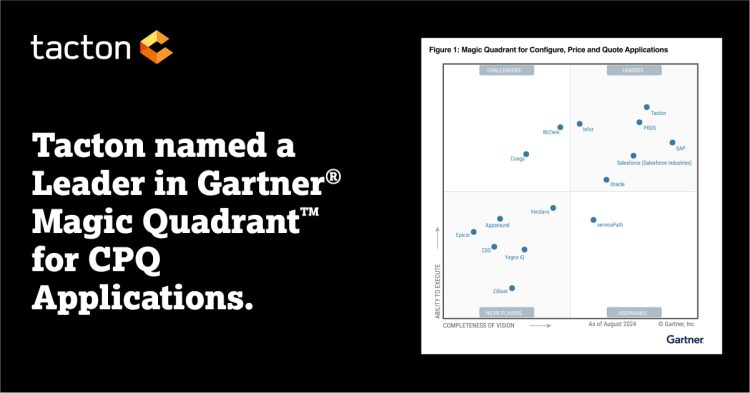
Tacton is a recognized leader in Gartner’s Magic Quadrant for CPQ Application Suites, thanks to our innovative approach to simplifying configuration and driving operational excellence. Adopting our cutting-edge solutions can enable you to stay competitive and attain your unique business objectives.  

 Request a demo to see how Tacton CPQ software can benefit your sales teams and prepare your operation for the future of manufacturing. 


Back to Resources

Top 5 Features for Complex Manufacturing Sales 

Discover how Tacton CPQ simplifies sales for manufacturers with dynamic pricing, 3D visualization, and effortless configuration. Get a demo!

Top 5 Features for Complex Manufacturing Sales 

At Tacton, we believe that selling complex, configurable products isn’t just a process– it’s an opportunity to redefine the buyer experience. For manufacturers navigating today’s dynamic markets, Tacton CPQ brings clarity, precision and automation that is needed to turn complexity into a competitive advantage.  

Our leadership in Configure-Price-Quote (CPQ) solutions has earned widespread recognition this year. Gartner named Tacton a Leader in the Magic Quadrant for CPQ Applications, and IDC MarketScape highlighted us as a Major Player in Configure Price Quote Applications for Commerce. Most recently, MGI Research ranked Tacton as the #1 CPQ Product for 2024 in its highly anticipated 2024 CPQ Top 25 Buyer’s Guide.

Let’s dive into the top 5 reasons Tacton CPQ the trusted choice for our manufacturing customers looking to simply their sale process and elevate the buyer experience:  

 1. Effortless Configuration for Complex Products 

In a world where buyers demand tailored solutions and instant precision, Tacton CPQ brings product configuration to an entirely new level. By embedding deep product intelligence into the sales process, Tacton enables manufacturers to manage millions of product variants effortlessly ensuring every configuration is valid, optimized, and perfectly aligned with customer needs. 

Manufacturers can mitigate the risks of brain drain and talent turnover—an increasing concern in an industry reliant on specialized sales knowledge. By automating complex configurations, even new sales reps can deliver first-time-right solutions with confidence. Tacton ensures that product expertise is embedded in the system, not just in the minds of experienced team members, enabling organizations to onboard new talent faster and maintain quoting precision regardless of changes in the workforce.  

Product variance becomes a strategic strength rather than a bottleneck, eliminating errors and accelerating sales cycles. Instead of struggling with complexity, manufacturers transform it into a clear, competitive advantage that drives growth and customer satisfaction. 

2. Pricing done right, the first time with dynamic pricing 

Manufacturers can’t afford margin leakage or pricing inconsistencies. That’s why Tacton CPQ integrates an intelligent dynamic pricing engine that ensures every quote is accurate, optimized, and immediate—no matter how complex the product or scenario. 

By factoring in material costs, market changes, and advanced pricing models like subscription-based or volume pricing, Tacton CPQ enables manufacturers to protect margins while delivering value to customers. Sales reps can confidently share precise, real-time prices directly within the configurator, earning trust at every stage of the buying journey. With Tacton, pricing becomes a strategic enabler—supporting profitability, adaptability, and speed across channels. 

3. Automated, branded quotes in minutes 

In the fast-moving world of complex manufacturing, slow and error-prone quoting processes are no longer acceptable. Tacton CPQ delivers automated, polished, and professional quotes with a single click, ensuring every detail is accurate and aligned with your latest product data, pricing, and branding. 

These data-driven documents not only speed up the sales process but also build confidence with buyers. Whether it’s a complex technical specification or a high-level summary, sales teams can generate tailored, impactful quotes in minutes—empowering decision-makers and driving deals forward. The result? Faster decisions, superior buyer experience, and a sales team that can focus on selling rather than chasing paperwork. 

4. Immersive 3D visualization brings your products to life 

Buyers today expect more than static documents—they want to see, interact with, and understand their solutions before they commit. Tacton CPQ transforms the buying experience with cutting-edge 3D visualization and augmented reality tools that deliver an engaging perspective on your products. 

With real-time visuals, buyers can explore configurations in stunning detail, gaining a clear understanding of their investment. These immersive tools eliminate ambiguity, reduce costly errors, and accelerate decision-making. More than just a visual aid, Tacton’s interactive tools inspire confidence, enabling sales teams to unlock cross-sell and upsell opportunities and create an experience buyers will remember. 

  5. Deliver a consistent sales experience across all channels  

Consistency is the foundation of a world-class buying experience, and Tacton CPQ ensures every interaction—whether through direct sales, partners, or self-service platforms—is seamless, accurate, and connected. By unifying product, pricing, and order data across channels, Tacton eliminates friction and empowers manufacturers to reach new markets with confidence. 

Partners can configure and sell with the same tools and accuracy as internal sales teams, while self-service options deliver modern convenience without sacrificing order quality. As product updates or pricing changes roll out, they’re instantly reflected everywhere, ensuring manufacturers can respond to opportunities faster than ever before. Tacton doesn’t just enable omnichannel sales—it gives them a competitive advantage. 

 Why Manufacturers Trust Tacton CPQ 

Tacton CPQ isn’t just a tool; it’s a strategic investment in the future of your sales operations. Widely recognized by leading analysts for its innovation and impact in the CPQ space, Tacton empowers manufacturers to simplify complexity, enhance efficiency and transform buyer engagement.  

From accelerating configuration and optimizing pricing to delivering immersive, interactive buying experiences, Tacton ensures precision, consistency, and confidence at every step of the buyer journey. These recognitions underscore our ability to help manufacturers not only meet the demands of today but prepare for the opportunities of tomorrow with innovation and efficiency. 

Ready to elevate your sales strategy and redefine your buyer experience? 

Schedule a Demo Today and see how Tacton CPQ can transform the way you sell, scale, and succeed. 

Back to Resources

Tacton CPQ’s Service Sales Solution

Discover how Tacton’s Service Sales Solution empowers manufacturers to combine product and service sales, streamline operations, and boost revenue.

Tacton CPQ’s Service Sales Solution

Unlock the full potential of service and product sales with Tacton CPQ’s Service Sales Solution for Manufacturers 

The manufacturing landscape is evolving rapidly, and customers now expect more than just a product—they seek comprehensive solutions that provide ongoing value throughout the lifecycle of their equipment. Manufacturers must rethink how to approach sales by uniting products and services into a seamless, value-driven experience. 

Tacton’s Service Sales Solution is designed to meet this demand, empowering manufacturers to combine product and service sales within a single, integrated system. This streamlines operations, boosts revenue opportunities, and fosters long-term customer loyalty. 

Maximizing Aftermarket Revenue Opportunities 

Aftermarket services represent a significant growth opportunity for manufacturers. Studies show that for 20% of B2B manufacturing companies, 30-49% of total revenue comes from aftermarket sales. Yet, many manufacturers struggle to fully capitalize on this potential due to fragmented systems and reactive service offerings. 

Tacton’s Service Sales Solution bridges this gap by monetizing every stage of the customer lifecycle. By embedding service sales within the CPQ process, businesses can simplify quoting, cut costs, and offer tailored services that enhance equipment performance and drive customer satisfaction. 

Empowering Unified Sales Strategies 

Traditionally, manufacturers have treated products and services as separate entities, often managing them through different tools and workflows. This siloed approach leads to inefficiencies, slower response times, and missed opportunities to deliver maximum value to customers. 

With Tacton’s Service Sales Solution, manufacturers can adopt a solution-selling approach, bundling products and services into tailored packages. Whether it’s preventative maintenance, spare parts, or training programs, these solutions meet the specific needs of each customer while enhancing the total value of the deal. 

Deliver value across the lifecycle  

By combining product and service sales, you can:   

  • Increase Revenue: Leverage combined product and service offerings to enhance customer relationships and unlock new revenue streams. 
  • Reduce Costs: Empower service sales reps to configure customized packages independently, easing the burden on engineering and IT teams. 
  • Enhance Customer Loyalty: Offer personalized service packages to build trust and foster long-term relationships, giving your brand a competitive advantage in customer retention. 

Service Sales Features That Make the Difference 

The Service Sales Solution is designed to simplify and streamline the way manufacturers offer aftermarket services. Here’s how it works: 

  • Seamless Integration with Installed Base: Gain full visibility into customer assets, enabling tailored service offers and better management of installed equipment. 
  • Flexible Service Offerings: Configure custom packages that meet diverse customer needs, including preventative maintenance, consumables, spare parts, and training. 
  • Advanced Service Scheduling: Leverage operational data and forecasting tools to determine the right service levels for each customer, ensuring proactive support. 
  • Clear Service Roles and Tasks: Assign the right resources to the right jobs with clearly defined service tasks and role allocations. 
  • Accurate Cost Calculation and Quoting: Automatically calculate costs and margins to generate precise quotes, improving profitability and reducing errors.

Creating A Competitive Edge for Manufacturers 

In a market driven by price competition, simply offering a quality product isn’t enough. Manufacturers need ways to stand out by delivering value that low-cost competitors cannot replicate. Tacton’s Service Sales Solution provides a powerful way to differentiate by combining efficiency, expertise and customer-centric offerings in one seamless system.  

By uniting product and service sales, manufacturers can shift their focus from transactional interactions to long-term partnerships. The ability to offer bundled solutions—tailored to meet specific customer needs—demonstrates a level of understanding and commitment that price-focused competitors often lack. Customers value the convenience of working with a single trusted partner who can deliver not just products but also the services that keep their operations running smoothly. 

Additionally, the streamlined approach reduces operational complexity, allowing manufacturers to focus on providing proactive support and personalized care. This positions manufacturers as indispensable allies in their customers’ success, strengthening relationships and ensuring retention over time. With Tacton’s Service Sales Solution, manufacturers aren’t just competing—they’re redefining what it means to provide exceptional value in a crowded market. 

Ready to Transform Your Service Sales? 

The future of manufacturing isn’t just about selling products—it’s about delivering solutions. With Tacton’s Service Sales Solution, you can simplify your operations, maximize the value of every deal, and create stronger, longer-lasting relationships with your customers. 

Watch our launch webinar to learn more or schedule a demo. 

Back to Resources

5 Reasons Why Aftermarket Sales Matter More Than Ever for Manufacturers 

Discover why aftermarket service sales are critical for manufacturers in 2024. Learn how economic shifts, higher margins, booming markets, and sustainability trends are reshaping the role of aftermarket services, with insights to boost profitability and customer loyalty.

5 Reasons Why Aftermarket Sales Matter More Than Ever for Manufacturers 

As we end 2024, aftermarket service sales have become a critical focus for manufacturers seeking to enhance revenue, build meaningful customer relationships and stay competitive. Economic pressures, evolving customer demands, and technological advancements are reshaping the role of aftermarket services. Here are the top five reasons why aftermarket sales matter more than ever for manufacturers today.  

1. Economic Shifts Favoring Maintenance Over New Purchases

With high inflation and rising interest rates, many companies are delaying major capital investments, opting instead to extend the life of their existing equipment. Manufacturers are meeting this need by focusing on aftermarket services like maintenance and upgrades, allowing customers to avoid the financial strain of new purchases. By pivoting to aftermarket services, manufacturers can adapt to a market that prioritizes maintenance over new purchases, positioning themselves as essential partners in helping customers maximize the value of their existing equipment.

2. Higher Margins for Long-Term Profitability

Aftermarket services offer financial benefits that often surpass those of new product sales. According to Deloitte, aftermarket services contribute an average of 25-30% of manufacturers’ revenue but represent over 50% of profits due to significantly higher margins.  Additionally, McKinsey research shows that companies with a strong aftermarket focus can see profit margins up to ten times higher than those relying on new equipment sales alone. This margin advantage makes aftermarket sales a crucial part of a sustainable, profitable business model.

3. Growth Potential in a Booming Market

The aftermarket sector is experiencing rapid growth.  This booming market presents manufacturers with fresh opportunities to expand their services portfolio. With higher margins and customer demand increasing, aftermarket services are an attractive and reliable revenue stream across various manufacturing sectors. As business face increased competition, those who leverage aftermarket services will find themselves in new opportunities to capitalize on the expanding market. 

4. Strengthening Customer Relationships through Regular Interactions

Aftermarket services provide manufacturers with ongoing touchpoints with their customers, enabling them to build and maintain strong relationships. Ongoing service interactions allow manufacturers to understand customers’ evolving needs, offer personalized recommendations, and increase long-term loyalty. A report from the Service Council indicates that companies focusing on service achieve 25-30% higher customer retention rates, with repeat customers contributing significantly to long-term revenue. Through tailored services, manufacturers can turn one-time buyers into long-term partners.

5. Aligning with Sustainability and Market Trends

As sustainability becomes a priority, aftermarket services align with market demands for eco-friendly practices. By maintaining and refurbishing existing equipment, manufacturers contribute to reduced waste and promote sustainable practices—a factor that appeals to environmentally conscious consumers. Additionally, with the rise of electric and hybrid vehicles, specialized maintenance and support services are becoming essential, presenting new growth opportunities for manufacturers.  

Tacton: Empower Manufacturers to Succeed with Aftermarket Sales 

Today’s manufacturers face mounting pressure to create lasting value beyond the initial sale. With Tacton’s upcoming Service Sales solution, manufacturers will soon be able to offer both products and services within a single, unified Configure, Price, Quote platform. By integrating service options like maintenance, spare parts, consumables, and training, Tacton empowers sales teams to unlock new aftermarket revenue streams, increase customer retention, and improve profitability. Through seamless quoting of both products and services in one system, manufacturers can enhance revenue, protect service margins, and build deeper customer relationships. Stay tuned for how Tacton will transform aftermarket offerings into powerful, long-term revenue streams for sustained success. 


Back to Resources

Key Terms to Know in Complex Manufacturing Sales

Discover key terms in complex manufacturing sales and how CPQ software streamlines processes, enhances customer satisfaction, and drives efficiency

Key Terms to Know in Complex Manufacturing Sales

In the realm of complex manufacturing, various terms and concepts shape the sales landscape and play a pivotal role in helping business leaders understand how to drive efficiency, enhance customer satisfaction, and ignite the sales process. Among those, Configure Price Quote (CPQ) software stands out as one of the most vital tools for streamlining sales processes and elevating buyer experience. CPQ software automates the configuration, pricing, and quoting process, enabling sales organizations to provide accurate quotes tailored to customer needs swiftly. Below we share several terms that define the next phase of efficiency and innovation within manufacturing sales. But first, a look at some of the enabling technology that improves the production process, sales process, and the buyer experience for new and existing customers. 

Understanding the Role of CPQ Software for Complex Manufacturing Sales 

Complex manufacturing involves the creation of highly customized products that involve multiple parts, processes, and raw materials. CPQ is one of the most crucial technologies for automating the configuration, pricing, and quoting process, enabling the sales team to streamline their processes and improve buyer satisfaction. In industries such as manufacturing, where product part combinations can number in the billions, CPQ is essential for streamlining customer relationship management, sales processes, and improving buyer satisfaction. 

CPQ software is particularly useful for complex manufacturing sales, where products are highly customized and have multiple components. By automating the sales process, CPQ software can help sales teams quickly and accurately configure products, calculate prices, and generate quotes. This automation is crucial in complex discrete manufacturing, where the sheer number of product combinations can be overwhelming. CPQ software simplifies this complexity, ensuring that sales teams can provide precise and timely quotes, enhancing the overall customer experience and increasing sales. 

Other Terms Customer Success and Sales Team Should Know in Complex Manufacturing 

Supply Chain Management: 

Focuses on the flow of goods and services, including all processes that transform raw materials into final products. Manufacturing operations management (MOM) is the comprehensive process of supervising all tasks involved in manufacturing. In complex manufacturing, effective supply chain management is vital to ensure all components arrive on time, minimizing production delays.  

Smart Manufacturing: 

Integrates advanced technologies – such as loT, AI and automation – to create more efficient and responsive manufacturing processes. A buyer-centric smart factory emphasizes customization and the ability to respond quickly to unique customer needs. By adopting smart manufacturing techniques, companies can improve product quality, reduce costs and adapt quickly to customer demands.  

Quality Control and Assurance: 

Ensures products meet required specifications and standards before they reach the customer. The production process is crucial in ensuring quality control and efficiency to maintain customer satisfaction and brand reputation. 

Sustainability in Manufacturing: 

Focuses on eco-friendly practices and reducing the environmental impact of manufacturing processes. Adopting sustainable practices can help companies appeal to environmentally conscious buyers while also contributing to long-term cost savings and regulatory compliance.  

Sales Automation: 

Tools and techniques to enhance the sales process, including lead management and follow-ups. Sales automation allows teams to focus on high-value interactions instead of tedious tasks, which accelerates the sales process and overall efficiency.  

Product Configuration: 

The process of defining and customizing products based on customer specifications. In complex manufacturing, CPQ software enables customers and sales teams to design highly tailored solutions, efficiently.  

Pricing Strategies: 

Techniques for setting prices that reflect market conditions and customer demand. When products are customized, automating the pricing process and ensuring each quote accurate reflects the cost of selections, applicable discounts and any customer-specific pricing terms not only speeds up the quoting process, but also maintains profitability.  

Quoting Process: 

The steps involved in generating accurate quotes for customers. An efficient quoting process, especially through CPQ software, enables sales teams to quickly provide pricing that reflects product configurations and customer needs. 

Integration with CRM: 

The ability of CPQ software to integrate with Customer Relationship Management systems for improved data flow. 

Guided Selling: 

A feature in CPQ systems that helps a sales team recommend products based on customer needs to enhance the customer experience 

Analytics and Reporting: 

Tools for tracking sales cycle performance and generating reports on quoting activities. 

Customization Options: 

Features that allow customers to tailor products to their specific requirements. 

Contract Management: 

The process of managing contracts associated with quotes and sales cycle. Efficient contract management ensures transparency and helps avoid errors or delays in finalizing deals 

Sales Call: 

The involvement of Subject Matter Experts (SMEs) in sales calls can enhance the value delivered to customers by providing critical technical insights and problem-solving capabilities. 

Contract Acronyms: 

TCV = Total Contract Value 

ACV = Annual Contract value 

SV = Subscription Value 

PV = Period Value 

OTC = One-Time Charge 

MRR = Monthly Recurring Revenue 

ARR = Annual Recurring Revenue 

TCO = Total Cost of Ownership 

Total Contract Value (TCV): Total Contract Value or TCV is the total value of all subscriptions over the length of a contract. 

Annual Contract Value (ACV): Annual Contract Value or ACV is the value per year within a contract. For a 1-year contract, the ACV is the same as the TCV. The TCV is the sum of all ACVs. The ACV is not the TCV ”Number of contract years” since all One-Time Charges (OTC) will be part of the Year 1 ACV and that over the contract length, different periods can be present. 

Subscription Value (SV): The total value of one subscription, including all Recurring Charges and One-Time Charges. 

Period Value (PV): The total value of recurring prices, including discounts for a given period. 

One Time Charge (OTC): One-Time Charges are charges that will be billed on one single occasion at the start of a subscription. 

Monthly Recurring Revenue (MRR): Monthly recurring revenue (MRR) is the revenue that this contract will have on a monthly recurring basis. 

Annual Recurring Revenue (ARR): Annual recurring revenue (ARR) is the revenue that this contract will have on an annual recurring basis. 

Equipment as a Service (EaaS): Equipment as a service (EaaS) is a model where the producer of a product rents out equipment to end-users while collecting payments on a monthly or yearly basis for the usage of the product. 

Meet Customer Needs, Build Accurate Quotes, And Improve Sales Processes 

Understanding key terms and concepts is crucial for driving efficiency, enhancing customer satisfaction, and boosting sales. CPQ technology stands out as a vital tool for automating processes and customizing quotes swiftly, especially in industries where products are highly customized. Additional areas such as Supply Chain Management, Smart Manufacturing, and Quality Control are essential in ensuring smooth operations and maintaining product quality. By ensuring your entire team understands these key terms and embraces the technologies that improve the sales process, businesses can stay ahead of the curve, deliver exceptional customer experiences, and increase sales in the competitive landscape of complex manufacturing sales. 

Back to Resources

Five Essential Steps for Manufacturers to Drive Strategic Digital Transformation in the Sales Process

Discover five key strategies to drive digital transformation in manufacturing sales. Learn how to adapt to the evolving buyer journey and boost your competitive edge.

Five Essential Steps for Manufacturers to Drive Strategic Digital Transformation in the Sales Process

Selling complex products has always been a challenge for manufacturers, and now professionals in this field are dealing with a new reality: buyers and the buying process have changed forever. 

According to Gartner’s Future of Sales report, nearly half of buyers prefer minimal engagement with sales teams, with over 80% of the buying process happening before they even engage with a vendor. This shift makes it critical for manufacturers to adapt to this new reality. Here are five strategies to maximize your digital transformation efforts and remain competitive in this quickly evolving market. 

Start by Asking the Right Questions 

Your transformation journey begins by asking critical questions needed to define your goals and initiate the process. Consider: How can our organization accelerate our digital transformation efforts to enhance efficiency, productivity, and supply chain visibility? What strategies can we implement to advance from planning digital initiatives to executing them effectively? And how can we leverage technology to ensure we don’t miss out on sales opportunities and fall behind competitors by delaying our digital transformation journey? 

Conduct a Thorough Assessment 

Successful sales organizations fully understand their internal landscape and broader market dynamics. Assess your current situation, to understand where your organization stands. It’s also vital to evaluate your technology and talent to evaluate the organization’s capabilities and identify gaps or overlaps. An honest assessment lays the groundwork for an effective digital transformation. 

Define Clear Objectives and Differentiators 

Before you get started, set your key operational objectives and identify how your digital transformation journey will support the sales strategy. This involves redefining how your organization differentiates itself from competitors in the market. For example, today’s businesses are shifting from selling standalone products to comprehensive solutions, such as multiple products or products bundled with managed services, to offer more value and meet evolving customer expectations. 

Choose the Right Digital Solutions

Selecting technologies that complement your current operations is vital. Configure Price Quote (CPQ) should be central to defining your strategy. Implementing a centralized system that houses important information about your products and your buyers empowers your sales team and gives them a leg up on the competition. Arming your sales engineers with this wealth of knowledge transforms salespeople into solution consultants, ensuring expertise is available to potential and existing customers anytime, across every channel. 

Accelerate Your Go-to-Market Agility

Today’s sales landscape is all about speed: how fast can your new products and solutions be brought to the market, and how quickly can they be sold. Organizations need to make informed decisions more frequently and move away from quarterly or monthly planning cycles towards weekly or even daily activities informed by real-time data. This increased agility enables quicker responses to changing market demands and customer expectations. 


While digital transformation has been top-of-mind for years, leading organizations are leveraging technology to create differentiated buyer engagement. By using advanced technology to provide personalized experiences, you can empower buyers to make informed decisions and streamline their path to purchase. 

At Tacton, we’re dedicated to helping manufacturers completely transform how complex products are developed, configured and sold.  Discover how Tacton CPQ can redefine your buyer engagement and speed up your sales process today.  

Back to Resources

The New Era of the B2B Sales Engineer: Five Things to Know

The COVID-19 pandemic had a far-reaching impact on business, including one that B2B sales professionals are still coming to grips with: a significantly altered buyer and buying process.

The New Era of the B2B Sales Engineer: Five Things to Know

The COVID-19 pandemic had a far-reaching impact on business, including one that B2B sales professionals are still coming to grips with: a significantly altered buyer and buying process.

Moreover, the emergence of a digital-native workforce, which will constitute the majority by 2025, has greatly influenced how purchasing decisions are being made. Most buyers now independently complete the entire industrial buying process without engaging directly with vendors, and this trend has intensified considerably since the outbreak.

Industrial leaders must recognize and adapt to this evolving buyer behavior, with a focus on building trust and showing expertise in order to better engage with this new wave of buyers and effectively support their purchasing journey.

Jeff Summers, Tacton’s Chief Customer Officer, has identified five pivotal trends that are shaping the new era of B2B sales engineering. His article in SalesTechStar, “The New Era of the B2B Sales Engineer: Five Things To Know”, delves deeper into the trends and offers valuable insights on how firms and sales engineers can leverage these trends to their advantage, honing their competitive edge.

Back to Resources

The Generational Shift in Manufacturing Sales is Here. Are You Ready?

Shifting manufacturing sales have made businesses look into new ways to reach customers and close deals. Find out how CPQ is doing that.

The Generational Shift in Manufacturing Sales is Here. Are You Ready?

In our last blog we took a deep dive into the fundamental ways in which buyers have changed in industrial manufacturing. Today’s buyers are more informed, tech-savvy, demanding and want the same engaging experiences they get from B2C companies.  

With so much information in their pockets, buyers conduct extensive research before even considering purchasing, seeking our reviews, product comparisons and expert opinions. Having these critical insights and information has shifted the power balance from sellers to buyer, making it critical for manufacturers to adapt and engage their customers in new ways.  

Just like the buyers, the buying process has evolved greatly. The journey used to be much more linear, customers would talk with sales reps, understand the product and receive specs for the product they would purchase. Now the journey is characterized by multiple touchpoints across various channels.  

With these various channels, buyers expect a seamless experience, personalized interactions and fast response times. These high demands require manufacturers to reimagine their go-to-market strategies.  

Tacton CPQ is enabling manufacturers to reinvent their strategies by creating new and exciting ways for buyers to see their unique products. Let’s investigate the evolution of the buying process, the implications for manufacturers and how CPQ is helping leading manufacturers keep up with the new buyer.  

The evolution of the buying process  

Digital first approach and a hybrid buying strategy

The days of the buying process being over the phone, or in-person have shifted, today the whole process starts online. Modern buyers conduct extensive research before ever contacting a supplier. They utilize company websites, social media, and industry forums to gather information, compare products, and read reviews. This digital-first approach means manufacturers must put more effort into creating an exciting online presence and provide quality information that is easily accessible so buyers can make informed decisions.  

Extended decision-making process 

The decision-making process in manufacturing sales isn’t as easy as it once was. It’s more uncommon for one person to make a final decision, multiple stakeholders from various departments are involved in the buying process. Gartner even notes that a new decision-maker enters the buying journey in the last 5% to 10% of the buying experience. Each stakeholder brings their own criteria and concerns when buying products. This extended decision-making process requires sellers to engage with multiple decision-makers, address a diverse range of needs, and provide more detailed and tailored information. 

Real-time information is critical 

Without up-to-date information it makes it nearly impossible for customers to make a final decision on products. If manufacturers can’t provide accurate pricing and availability prospects will quickly move onto companies who can. They simply do not want to wait for days for a quote or product details. Real-time information is not just a convenience; it’s a necessity. 

What are some key features manufacturers can use to address customer needs?  

  1. Self-Service options: Buyers increasingly prefer self-service options, allowing them to independently access information, configure products, and make purchases. Self-service portals empower buyers to take control of their purchasing process, offering convenience and speed without the need for constant interaction with sales representatives. Creating better buying engagement starts with being compelling and consultative. Manufacturers who can provide this type of information and consult online will win more deals. 
  2. Virtual and augmented reality: The use of VR and AR is revolutionizing product demonstrations and virtual tours. Buyers can now experience products in a more immersive and interactive way, gaining a better understanding of the product’s features and benefits without being physically present. 
  3. Analytics: Advanced analytics are transforming the way manufacturers understand and engage with their customers. By leveraging data analytics, manufacturers can gain insights into buyer behavior, preferences, and trends. This allows for more targeted marketing, improved sales strategies, and enhanced customer experiences. 

Strategies for manufacturers 

Digital engagement and buyer-friendly experiences:

Manufacturers who prioritize having a robust and easy to use digital presence will help attract and retain modern buyers and see improvements in sales.  

Real-time data integration:

Integrating real-time data into your systems is crucial to provide up-to-date information to buyers. This ensures that potential customers have access to the latest product details, pricing, and availability, which can significantly influence their purchasing decisions. 

Adoption of innovative technologies:

Embracing technologies like VR, AR, AI, CPQ, self-service options, and analytics can dramatically enhance the buyer experience. These tools not only provide a more engaging and informative experience but also help streamline the sales process and meet the evolving demands of buyers. 

How is CPQ enabling these strategies?  

Manufacturers who have CPQ at the center of their selling process have found it easier than ever to address a diverse array of challenges and opportunities that are being driven by their customers. Here are just a few ways CPQ is helping modern sales strategies succeed: 

Enhancing the digital first hybrid approach 

With CPQ manufacturers are always able to provide detailed, accurate product information online. This ensures that every product is valid, buildable and deliverable. CPQ also enables buyers to explore different configurations and pricing scenarios, improving their understanding and giving them confidence to make a final purchase.  

Supporting the decision-making process 

Giving buyers the full picture of a product, complete with comprehensive and precise data, CPQ can offer detailed proposals that can address the concerns of any decision maker in the process.  

Providing real-time information:  

CPQ systems deliver real-time updates on product availability, pricing, and configurations. This immediacy meets the expectations of modern buyers for instant information, reducing the wait time and increasing buyer satisfaction. 

Using visualization and augmented reality for lead generation 

It is also possible to use product visualization in your lead generation activities by offering visual configuration software on your website for anonymous users. By offering your full portfolio online you can influence your prospect’s buying criteria before they reach out to your sales reps. 

Empowering Self-Service and buyer engagement:  

CPQ can support self-service portals by offering tools that allow buyers to independently configure products, obtain quotes, and make purchases. This empowerment aligns with the preference of modern buyers for control and convenience. 

Driving insights through analytics:  

CPQ collects and analyzes vast amounts of data, providing manufacturers with actionable insights into buyer behavior, preferences, and trends. These insights drive more targeted and effective sales and marketing strategies. 

The generational shift in manufacturing is here to stay

Buyers will only become more focused on purchasing products quickly, and online. Manufacturers who take advantage of these new buyers will find themselves in a position to grow their business in the years to come.  

Tacton CPQ was built specifically to help the sales needs of leading global manufacturers. Companies such as Siemens and Vantage are using Tacton to revolutionize their sales process. Find out more in our latest eBook “Keeping Up with The Modern Manufacturing Buyer”.  

GET THE EBOOK

Back to Resources

Preserving Expertise with Tacton CPQ: A Guide to Mitigating Brain Drain

Manufacturing brain drain is causing many challenges for manufacturers. Configure Price Quote software is solving them. Find out how.

Preserving Expertise with Tacton CPQ: A Guide to Mitigating Brain Drain

With manufacturing feeling the fundamental shifts in buyer engagement, sales models, and even sustainability, they are also facing new challenges when it comes to employee retention and the challenges it causes. As of June 2024, the employee turnover rate in the manufacturing industry was 37%.  

With employees leaving at such a high rate, manufacturers face the common challenge of brain drain. As many employees retire, or find new jobs, much of their product, sales and engineering knowledge is lost. This causes companies to struggle to properly create products without errors and meet the needs of new and demanding customers.  

This phenomenon can significantly impact an organization’s efficiency, innovation, and competitive edge. However, with the right tools and strategies, companies can preserve valuable expertise and mitigate the effects of brain drain. One solution, Tacton Configure, Price, Quote (CPQ) is helping leading manufacturers combat brain drain and achieve new levels of profitability and efficiency. Let’s look at the current situation and how CPQ can help.  

What is brain drain?

Brain drain is the gradual loss of intellectual capital, skills and industry and product knowledge when employees leave an organization. This challenge can be particularly difficult in manufacturing where intricate processes, complex product configurations and industry specific knowledge are critical for selling. These are some common challenges faced after key employees leave: 

Loss of efficiency: Remaining employees may struggle to match the productivity level of their former colleagues, leading to delays and increased costs. New employees will find challenges about learning specific product information that would help them onboard and sell faster.  

Decreased innovation: Without experienced team members and their product knowledge it can become more difficult to drive innovation.  

Knowledge gaps: Critical knowledge about customer preferences, product configurations, and unique solutions can be lost, affecting customer satisfaction and sales. 

How does CPQ mitigate brain drain?  

Your sales team spends two-thirds of its time away from customers. By implementing CPQ, you can automate most tasks, including quoting, filling out spreadsheets, and attending to administrative tasks. 

When you free up your agents, they become more effective because they have more time to spend building impactful relationships with current customers, seeking new clients, and pursuing professional development. Here are a few more ways Tacton can help: 

Knowledge capture and standardization 

With the help of CPQ, manufacturers can document and standardize their product configurations, pricing rules and quoting processes. By creating a centralized source of truth with CPQ it’s easier for companies to withstand the effects of the loss of critical information when employees leave.  

This also makes the onboarding process for new hires that much easier. They will be able to quote with 100% confidence as CPQ ensures that no invalid product configurations make it into production.  

Guided selling and configuration 

Navigating complex product configurations has been a challenge for sale reps, that isn’t a problem anymore with the help of Guided Selling. Guided Selling provides step-by-step guidance ensuring that the newest sales rep can accurately configure products according to customer requirements. This helps insulate manufacturers from over reliance on a few key experts across the organization.  

Seamless end-to-end connections  

Using CPQ as a centralized hub connected to other business critical systems such as ERP, CRM, PLM and more, it’s easier than ever to have up-to-date information for your team. Creating this automated process minimizes the need for manual and admin tasks and reduces the error-prone quoting process by delivering correct and detailed product information. It also frees up experienced employees to focus on more strategic tasks, rather than routine administrative work. 

Centralized knowledge repository 

With the help of CPQ manufacturers can create a central hub for product and sales knowledge. This approach ensures that all employees have access to the latest information. It also facilitates knowledge sharing and collaboration, fostering a culture of learning and improvement.  

Analytics and insights  

Tacton CPQ provides valuable analytics and insights into sales and product performance. By analyzing this data, organizations can identify trends, optimize their product offerings, and make informed strategic decisions. This data-driven approach helps maintain the organization’s competitive edge; even as experienced employees leave. 

HMF Cranes combats brain drain with CPQ  

One of our customers, HMF Cranes, one of the world’s leading manufacturers of truck-mounted cranes strives to be the most innovative business in manufacturing. In 2022 they implemented Tacton CPQ to help their quoting and ordering process. Another added benefit they saw was how quickly they could onboard new hires.  

Onboarding new employees also became faster with Tacton. Without CPQ it was a time-consuming process to teach new employees the intricacies of the product, as this would be an error-prone learning process. Now with Tacton it’s easier to train new employees with the new system, and it gives them responsibility to configure a crane with the knowledge that it’ll be correct. 

With the changing economy, pricing is also an important factor for HMF in selling their cranes. With Tacton, keeping up to date with the latest prices is easy and always accurate. 

As Alicia Vivier Brockhoff notes:

“It’s easier to be a customer and an HMF distributor. It’s easier for us to implement new products and train new salespeople. There are a lot of great benefits”

HMF is just one example of companies Tacton is helping create a centralized tool for all things sales, engineering and customer experience.  

Are you ready to take the next step?  

Brain drain is a significant challenge for many manufacturing organizations, but it can be effectively mitigated with the right tools and strategies. Tacton CPQ offers a comprehensive solution for preserving and leveraging critical knowledge, ensuring that expertise is retained and accessible across the organization.  

By capturing, standardizing, and automating complex product knowledge, Tacton CPQ empowers companies to maintain efficiency, drive innovation, and continue to deliver exceptional value to their customers. 

Are you ready to future-proof your organization against brain drain? Explore how Tacton CPQ can help you preserve expertise and maintain your competitive edge in the ever-evolving manufacturing landscape. 

Chat with our experts 

Back to Resources

The Buyers Have Changed – Understanding the New Industrial Manufacturing Customer

Digital first manufacturing is here to stay as new digital-native buyers come into buying power over the next decade.

The Buyers Have Changed – Understanding the New Industrial Manufacturing Customer

The past five years have demonstrated just how quickly things can change for an entire industry. Since the beginning of the COVID-19 pandemic, manufacturers typical B2B sales journey has been fundamentally altered. This shift is driven by a younger and digital native buyer. The traditional, relationship-driven sales approach has evolved as buyers demand digital-interactions, speed, and transparency.  

Today’s buyers are more informed about the products and companies they want to purchase from. Over 80% of the buying process now occurs without engaging a vendor (Gartner), it was 67% just 3 years ago. These new customers also want the same exciting and personalized experiences they encounter in the B2C world. 

As manufacturers navigate this shift, understanding the new expectations and behaviors of these modern buyers is crucial. Manufacturers are increasingly turning to Configure, Price, Quote (CPQ) solutions to adjust to the needs of the newest buyer by streamlining the sales process, enhancing customization, delivering fast and accurate quotes and providing an exciting way to buy online. Let’s look deeper into the new buyer behavior since the pandemic and how leading manufacturers can leverage these insights with the help of CPQ to enable a new level of buyer engagement.  

This opportunity is enormous for manufacturers who act quickly to meet and engage with these customers anywhere in their buying journey.  

What does the new manufacturing buyer look like?

Today’s buyers are comfortable with digital tools an expect seamless online interactions 

Since the pandemic, manufacturing buyers have increased their use and reliance on digital tools. The shift to virtual interactions has made the job of top sales rep much more difficult for your business. That’s why nearly half of buyers would prefer to never interact with a salesperson.  

Today’s buyers are more than happy to buy their products fully online, and they expect manufacturers to provide seamless and efficient online interaction to complete these purchases.  

Manufacturers must ensure their digital channels are intuitive, responsive, and integrated, providing a user experience that meets the high standards set by consumer technologies. Implementing Tacton CPQ software can streamline the online buying process, offering real-time customization and accurate pricing that enhances the overall customer experience. Check out our latest ebook for an in depth dive into the new customer profile! 

GET THE EBOOK

Demand for personalization 

Modern B2B buyers expect the same level of personalization in their professional purchases as they do in their personal lives. They seek solutions that are specifically tailored to their unique needs and preferences, rather than generic offerings. This demand for personalization extends beyond products to include personalized content, recommendations, and interactions.  

Manufacturers can meet this expectation by leveraging Tacton CPQ that allows for detailed customization of products and services. These tools can provide tailored quotes and configurations that address individual customer requirements, quickly enhancing customer satisfaction and loyalty. 

Informed decision makers 

With so much information at the fingertips of every buyer it’s easier for buyers to make fully informed decisions before they purchase or reach out to a sales rep. Access to detailed product information, customer reviews, customer stories and even competitive analysis means that buyers enter the sales conversation with a higher level of knowledge and expectations from a manufacturer.  

Customers demand transparency, accuracy and value in every interaction. For manufacturers this means the sales approach must be consultative, providing valuable insights and solutions rather than just products and product information. Utilizing Tacton CPQ software can help sales teams quickly generate precise quotes and configurations, allowing them to respond promptly to the informed queries and complex requirements of today’s savvy buyers. This not only improves the efficiency of the sales process but also builds trust and credibility with customers. 

Key Factors Driving Change for manufacturers

Digital Native Demographics 

A large factor driving the change in buyer behavior is the growing number of digital native demographics with buying power in the manufacturing industry. A digital native is a person who grew up with the presence of digital technology or in the information age.  As younger professionals move into decision-making roles, they will take their internet first mentality to their buying decisions.  

Sustainability and regulatory compliance standards

Sustainability has become a critical consideration for many buyers. With impending legislation and regulations there is a growing emphasis on purchasing products that are both high-quality and produced with the environment and social responsibility in mind. Buyers are scrutinizing manufacturers’ practices and choosing partners who align with their own values of sustainability and ethics. They demand transparency in how products are made, and the impact their product will have after it’s been purchased. Manufacturers can use Tacton’s Environmental Footprint Configuration to quickly calculate the impact their products will have and share that quickly with customers. By integrating sustainability into their sales process, manufacturers can appeal to this growing buyer priority and build stronger, more loyal customer relationships. 


Implications for manufacturers 

It’s time to invest in a seamless online buying experience 

As buyers become increasingly digital-savvy, manufacturers must invest in enhancing their digital engagement. This involves creating a seamless, integrated online buying experience that meets the expectations of today’s buyers. Tacton CPQ can play a crucial role in this transformation, offering tools that streamline the configuration, pricing, and quoting processes, and ensuring that digital interactions are smooth and efficient. 

Leverage customer data for personalized solutions 

To meet the demand for personalization, manufacturers need to collect and leverage customer data effectively. By understanding individual customer preferences and needs, manufacturers can offer tailored solutions that enhance the buying experience. Tacton CPQ facilitates this by capturing detailed customer data during the configuration and quoting process, enabling manufacturers to provide highly personalized products and services. 

Transparency in sustainable practices to meet buyer and regulator expectations 

Transparency and sustainability are becoming non-negotiable for modern buyers. Manufacturers must be transparent about their supply chains and demonstrate a commitment to sustainable practices. Tacton CPQ can help manufacturers communicate their sustainability initiatives and product features clearly, providing the transparency that buyers seek. By doing so, manufacturers can build trust and meet the evolving expectations of their customers. 

In closing 

The landscape of industrial manufacturing sales has been irrevocably transformed by the COVID-19 pandemic, ushering in a new generation of buyers who are digitally savvy, demand personalized experiences, and are well-informed. 

Leveraging Tacton CPQ software is a key strategy in this adaptation, enabling manufacturers to meet the heightened expectations of modern buyers with seamless digital interactions, tailored solutions, and transparent practices. By embracing these tools and focusing on enhancing digital engagement, personalizing customer experiences, and committing to sustainability, manufacturers can successfully navigate the changing market dynamics and build stronger, more loyal customer relationships. 

Ready to learn more? Chat with our experts

Let’s talk

Back to Resources

Tacton’s Next Gen Approach with AI for Manufacturing Sales

AI for B2B manufacturing is here to stay. Find out how Tacton is using AI to simplify the quoting and selling process.

Tacton’s Next Gen Approach with AI for Manufacturing Sales

Why is AI urgent in the B2B manufacturing sales process?

As we stand on the brink of a new era in manufacturing, the integration of Artificial Intelligence (AI) into the sales process presents an unprecedented opportunity for innovation and growthWith 75% of advanced manufacturing companies prioritizing AI technologies, the industry is poised for a significant leap forward. AI’s role in enhancing productivity across the value chain—from procurement and maintenance to logistics—is becoming increasingly evident. 

Both B2B buyers and sellers are becoming digital natives. Buyers expect the buying process to be instant and reliable, pushing manufacturers to adopt digital sales automation technologies that can make the buying journey smooth, fast, and flawless – for both parties. Smart configurationpricingquoting technologies can bridge the gap between buyers’ digital purchasing expectations and the sales methods used by traditional manufacturing companies. Generative AI has the power to boost this transition.  

We also see how product differentiation and value-based selling become more critical to winning deals. Buyers expect manufacturers to offer products that are unique to their use case and to present the business value created – already early in the buying journey. In a world like this, the day-to-day sales tasks of requirements collection, solution definition, quote generation and order taking need to be faster and more automated so that the sales rep can focus the sales discussion on value creation rather than shuffling emails about technical features. Tacton CPQ’s award-winning sales automation solution already helps B2B manufacturers in this vein, but generative AI opens completely new possibilities to further reinforce this.  

Boosting Tacton CPQ with Generative AI – our vision 

Our journey towards incorporating AI into Tacton’s CPQ solutions is driven by a desire to empower manufacturers with selling and buying tools that are not just about automation but smart, strategic decision-making.  

Tacton’s long-term approach to AI is grounded in the following principles: 

  • Careful evaluation of use cases, separating AI hype from business value. Focus on areas where AI can have the most impact, avoiding the risk of meaningless or even inaccurate responses.
  • Co-innovation with customers. As a part of our continuous and ongoing discussions with our esteemed customers, AI use cases will be presented, discussed, and developed based on their business needs. This will also ensure that we separate hype from business value.
  • Evolving portfolio. As we will see, AI can be used in multiple parts of the sales and product introduction process. Tacton will gradually release capabilities, listening and learning from those while moving to the next feature.
  • Safe, secure, and compliant – for business and user. Training AI models can be performed on different types of data sets, e.g. public data (e.g. Tacton Help Center content) or customer-specific data and logic (residing in the specific CPQ tenants used by one Tacton customer). Tacton will always respect the integrity of our customer’s data and we need to be very clear to everyone involved how AI will be trained.  
  • Future proof – model agnostic, pluggable architecture. During its 26+ years of existence, Tacton has taken great pride in being integration-agonistic to other enterprise systems such as ERP, CRM, CAD, and PLM. This principle will apply also to AI platforms. Whatever AI integrations we do, needs to be flexible and expandable to accommodate the shifting enterprise software landscape of our clients.

To continue being the leader in CPQ, Tacton is investing in developing its SaaS CPQ to incorporate Gen AI and Machine Learning technologies in the following two areas:

Make selling and buying easier and faster

  • Increase speed and accuracy in sales. Sales reps and buyers can use natural language configuration or an RFQ document for fast and valid product selection and accelerate sales quote production. Help your sales reps quote on customer needs accurately (see mockup image).
  • Price Optimization. Based on win-loss analysis of past similar deals, guide the sales rep in the best price points to maximize both deal profitability and win rate. 

Decrease maintenance costs for CPQ system ownership

  • Help Center chatbot. Avoid having to search for support articles on how to work with Tacton administration. Use a conversational bot to refine questions and answers more effectively, reducing the time to value for your CPQ administrators. 
  • Admin Assistants. Based on the AI model of Tacton CPQ’s help center and customer-specific data in the CPQ environment, Administrators can get snippets of code, formulas, and expressions to extend the capabilities of the customer’s implementation of Tacton CPQ. This can also include best practices in product and pricing modeling.
  • Auto Translations. Automatic translation of UI text, product descriptions, and quotes, avoiding misunderstandings and errors.
  • Model Optimization. Ask and receive model optimization recommendations in natural language immediately to ensure higher quality and performance. 

Looking Ahead: A Strategic Partnership for Innovation

For executives contemplating the future of their sales processes, Tacton’s forward-looking approach offers a beacon of innovation and growth. By aligning with Tacton, companies can: 

  • Prepare for the integration of AI-driven efficiencies into their sales process.
  • Anticipate a future where sales cycles are accelerated, and productivity is maximized.
  • Look forward to enhanced customization and customer engagement through intelligent analysis & recommendations.

Be a part of the future today. Reach out to Tacton to learn more about our vision for AI-driven manufacturing sales and how we can help prepare your business for the innovations ahead. 

Tacton Forward-Looking statement 

  • Some services or features referenced in connection with this presentation may not have been released and are not currently available. 
  • The final product may differ from what is described here 
  • The target release date is not set and may change due to other priorities. The delivery of the final service or feature may be delayed or not take place at all. 
  • Customers who purchase our services should make purchase decisions based on features that are currently available. 

Chat with our experts